
Fingolimod
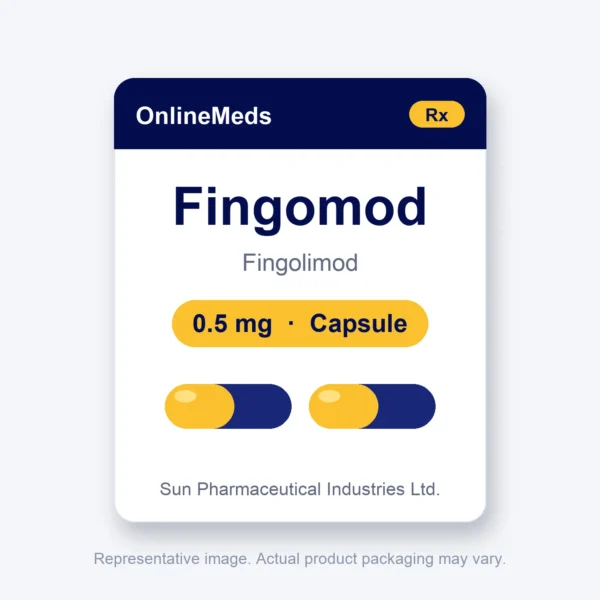
About Fingolimod
Fingolimod — sphingosine 1-phosphate (S1P) receptor modulator
Fingolimod is an oral disease-modifying medicine for relapsing forms of multiple sclerosis. It was the first oral treatment licensed for MS, replacing injections for some patients.
How Fingolimod works
It binds S1P receptors on lymphocytes and traps a proportion of them inside lymph nodes, so fewer circulate to reach the central nervous system. Circulating lymphocyte counts fall substantially while treatment continues and recover gradually after stopping — which is why both starting and stopping need planning.
What it is licensed for
Relapsing-remitting multiple sclerosis, including in some countries relapsing MS in children and adolescents.
How it is taken
An oral capsule taken once daily. The first dose is given under observation, because heart rate slows for several hours afterwards. Dosage must be determined by a qualified healthcare provider.
What your prescriber monitors
ECG and heart rate for at least six hours after the first dose; full blood count; liver function; blood pressure; an eye examination for macular oedema; and varicella-zoster immunity before starting.
Important cautions and interactions
Bradycardia and heart block can occur with the first dose, so recent cardiac events, certain arrhythmias and some heart-rate-lowering medicines are contraindications. Because immune surveillance is reduced, infections need prompt attention and live vaccines are avoided. Rare cases of progressive multifocal leukoencephalopathy have been reported. It must not be used in pregnancy, and effective contraception is required during treatment and for two months after stopping.
Where Fingolimod sits in its class
Fingolimod was the first S1P modulator licensed for MS; later members of the class — siponimod, ozanimod, ponesimod — bind fewer receptor subtypes and were developed partly to reduce the first-dose cardiac effect. Fingolimod's dosing is simple and its monitoring requirements are heavier; where an oral MS treatment sits alongside injectables or infusions is a decision for your neurologist.
What to expect in the first weeks
Expect several hours of observation on day one, with pulse and blood pressure checked hourly and an ECG before you leave. Headache, diarrhoea, back pain and cough are frequent early on. A blood test at around one month confirms lymphocyte counts have settled where expected, and an eye appointment is usually arranged for three to four months in. Any fever, shingles-like rash or blurring of vision warrants contact rather than waiting.
Before you start Fingolimod
Your neurologist will want a recent ECG, a full blood count, liver function, and evidence of chickenpox immunity or vaccination before the first dose. Say if you have had any heart rhythm problem, fainting, or a recent heart attack or stroke, and list any medicine that slows the heart, including beta-blockers and some calcium channel blockers. Mention any planned pregnancy, and any history of eye disease or diabetes, because macular oedema screening depends on it.
Generic Fingolimod and Gilenya
Generic Fingolimod contains the same active ingredient as Gilenya®, produced by licensed pharmaceutical manufacturers. The brand name and the price differ, not the molecule.
Fingolimod is a prescription-only medicine. A valid prescription is required and every order is reviewed by a licensed pharmacist before dispatch. Used as prescribed by a licensed medical professional.
Frequently asked questions
Why does the first dose of fingolimod need medical observation?
Heart rate drops in the hours after the first dose, and in a small number of people conduction through the heart is affected. Observation with ECG monitoring is a licensing requirement for the first dose, and again if treatment is interrupted.
Does fingolimod affect the immune system?
Yes, by design — it holds lymphocytes in the lymph nodes so fewer reach the central nervous system. That is how it works, and it is also why infections need attention early and why live vaccines are avoided during treatment.
What happens if fingolimod is stopped?
Lymphocyte counts return towards normal over weeks to months, and MS activity can return. Stopping is a decision for your neurologist, including how and when it is timed — it should not be stopped abruptly on your own.
Do I need a prescription to order Fingolimod?
Yes. Fingolimod is a prescription-only medicine. Upload a valid prescription at checkout — every order is reviewed by a licensed pharmacist before dispatch.
Browse by condition
Last updated: October 3, 2026

Medically reviewed by
Mahesh Gupta
Mahesh Gupta is a licensed clinical pharmacist with 15 years of experience. He holds a B.Pharm and M.Pharm from LN Mithila University. At OnlineMeds, he reviews medicine and health content to help ensure it is accurate, evidence-based, and easy to understand.