Free express shipping over $999 · Verified pharmaceuticals · Discreet packaging worldwide
Skip to order
Prescription only medicine

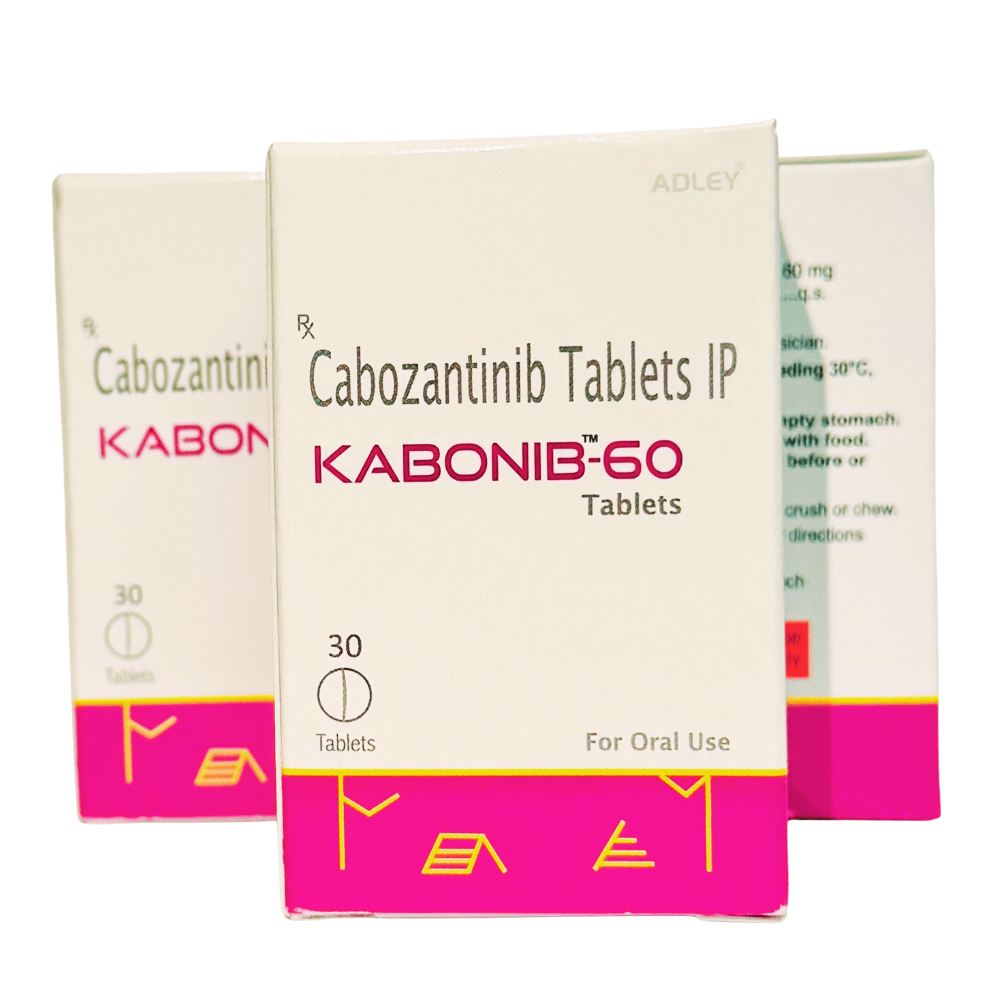
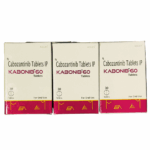
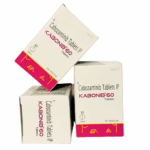
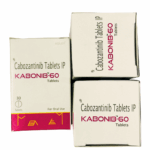
Kabonib 60 mg Tablets

Cabozantinib 60 mg · Generic equivalent of Cabometyx

Kabonib 60 mg Tablets is a trusted medication containing Cabozantinib, designed for personal use under the guidance of a healthcare professional. Available for prescription-based international supply with discreet worldwide delivery.

Active ingredient
Cabozantinib
Strength
60 mg
Form
Tablet
Manufacturer
ADLEY FORMULATIONS
Made in
India
Prescription
Required
Commonly used forKidney Cancer
$676.50 per pack of 30 tablets

Prescription required — upload it at checkout.

Generic equivalent of Cabometyx — up to 80% less than the branded price

Verified pharmacy Genuine medication Tracked shipping Medically reviewed by Mahesh Gupta
Licensed Pharmacy Trust & safety
Licensed Manufacturers Every medicine from a licensed manufacturer
Dedicated Oncology Team Doctor + pharmacist review every order before dispatch
Worldwide Delivery UK · US · AU · EU · NZ — tracked and insured
About this medicine

What is Kabonib 60 mg Tablets?

Cabozantinib is a targeted cancer medicine taken by mouth. As tablets (the Cabometyx presentation, 20/40/60 mg) it is used for advanced kidney cancer (renal cell carcinoma), for liver cancer (hepatocellular carcinoma) after sorafenib, and for some thyroid cancers that no longer respond to radioactive iodine. As capsules (the Cometriq presentation, 20/80 mg) it is used for medullary thyroid cancer.

The tablets and capsules deliver the drug differently and are not interchangeable — never swap one for the other, or change the dose, without your oncologist's instruction.

Cabozantinib blocks several of the signals that tumours use to grow and to build the blood vessels that supply them. It is taken once a day, continuously, on an empty stomach. Side effects such as diarrhoea, tiredness, hand-foot skin reaction and raised blood pressure are common and are usually managed by adjusting the dose. It is a prescription-only medicine; a valid prescription must be provided at checkout.

How it works

How does Cabozantinib work?

Cancer cells and the blood vessels around them communicate through proteins called kinases. Cabozantinib blocks several of them at once: VEGFR2, which tells new blood vessels to grow towards a tumour; MET and AXL, which help tumour cells survive, spread and resist other treatments; and RET, which drives some thyroid cancers. Switching these signals off slows the tumour's growth and cuts its blood supply. The same VEGFR pathway is used by healthy blood vessels, which is why raised blood pressure, bleeding risk and slower wound healing can occur.

Kinase blockade

Cabozantinib occupies the ATP-binding site of MET, VEGFR2, AXL, RET and related kinases, stopping them from passing on growth signals.

Cutting blood supply

With VEGFR2 blocked, the tumour cannot recruit the new blood vessels it needs to keep growing.

Limiting spread

MET and AXL signalling helps cancer cells move and invade; blocking them limits spread and one route of resistance to anti-VEGF treatment.

Uses

What is Cabozantinib used for?

Advanced renal cell carcinoma (kidney cancer)

Tablets. First-line (alone or with nivolumab) or after prior anti-VEGF therapy, as your oncologist decides.

FDA EMA CDSCO
Hepatocellular carcinoma (liver cancer)

Tablets. After prior treatment with sorafenib.

FDA EMA
Differentiated thyroid cancer, radioactive-iodine refractory

Tablets. After prior VEGFR-targeted therapy, in adults and children aged 12 and over.

FDA EMA
Medullary thyroid cancer, progressive and metastatic

Capsules (Cometriq presentation, 20 mg / 80 mg). A different dose and formulation from the tablets.

FDA EMA

Only your oncologist can determine whether this medicine is right for your diagnosis. The above is for information only.

Dosage

How to take Kabonib 60 mg Tablets

Your oncologist will prescribe your exact dose. The right dose for you depends on your weight, kidney and liver function, and — for some medicines — your genetic test results.

Always take exactly as prescribed. Do not change your dose or stop taking this medicine without speaking to your doctor first, even if you feel well.

Missed a dose? If it is less than 12 hours until the next dose, skip the missed one. Never take two doses to catch up.

With food? Take on an empty stomach: no food for at least two hours before and one hour after the dose. Swallow whole with water; do not crush. Avoid grapefruit and grapefruit juice.

Important safety information

Safety & warnings

Please read this section before taking Kabonib 60 mg Tablets and discuss any concerns with your oncologist.

Common side effects

Side effects affect some people, not everyone. Most are manageable — let your treatment team know about anything that concerns you.

  • Diarrhoea
  • Tiredness (fatigue)
  • Nausea, reduced appetite, weight loss
  • Hand-foot skin reaction
  • Raised blood pressure
  • Mouth soreness, taste changes
  • Hoarse voice
  • Raised liver enzymes, low magnesium or potassium
  • Underactive thyroid

Contact your doctor immediately if you notice:

  • Vomiting blood, black stools, coughing blood, or bleeding that will not stop Seek emergency care — cabozantinib can cause serious bleeding.
  • Severe abdominal pain, fever, vomiting Go to the emergency department — possible bowel perforation or fistula.
  • Chest pain, sudden breathlessness, calf pain or swelling Call emergency services — possible blood clot or heart event.
  • Severe headache, confusion, seizures, vision change Seek urgent care — possible dangerously high blood pressure or a rare brain condition (PRES).
  • A wound that will not heal, or planned surgery or dental work Tell your oncologist — cabozantinib is usually paused before and after surgery.
  • Jaw pain, loose teeth, or exposed bone in the mouth Report promptly — possible osteonecrosis of the jaw. See a dentist before starting if possible.
  • Diarrhoea that is severe or does not settle with your prescribed treatment Contact your team the same day; dehydration can develop quickly.

Important: tell your doctor about these medicines

Taking Cabozantinib with certain other medicines can be dangerous. Always tell every doctor, dentist, and pharmacist about all medicines you are taking.

  • Strong CYP3A4 inhibitors (ketoconazole, itraconazole, clarithromycin, ritonavir) and grapefruit Major

    Increase cabozantinib levels and side effects.

  • Strong CYP3A4 inducers (rifampicin, phenytoin, carbamazepine, St John's wort) Major

    Reduce cabozantinib levels and may make it less effective.

  • Warfarin and other anticoagulants or antiplatelet drugs Major

    Additive bleeding risk.

Pregnancy & breastfeeding

Cabozantinib can harm an unborn baby. It should not be used in pregnancy, and women who could become pregnant should use effective contraception during treatment and for at least four months after the last dose.

Do not breastfeed during treatment or for four months after the last dose.

Cabozantinib may reduce fertility in men and women. Discuss fertility preservation before your first dose if relevant.

Storage

How to store Kabonib 60 mg Tablets

Temperature

Store below 25°C (77°F) in the original packaging.

Light & moisture

Keep the container closed; protect from moisture.

Keep away from children

Keep out of the sight and reach of children.

Safe handling

Anticancer medicine: swallow whole, do not crush or open, wash hands after handling. Return unused medicine to a pharmacy.

Travelling

Carry in the original labelled pack with a copy of your prescription and a letter from your oncologist. Keep tablets and capsules clearly separate if you have both — they are not interchangeable.

Reviewed for accuracy

Medically reviewed content

Mahesh Gupta

Mahesh Gupta

B.Pharm, M.Pharm

Mahesh Gupta is a licensed clinical pharmacist with 15 years of experience. He holds a B.Pharm and M.Pharm from LN Mithila University. At OnlineMeds, he reviews medicine and health content to help ensure it is accurate, evidence-based, and easy to understand.

Our commitment to you

How we support oncology patients

We understand that accessing the right cancer medicine can feel overwhelming. Here is what you can expect from us.

Personal oncology support

Every enquiry is reviewed by our oncology doctor and pharmacist team — not an automated system.

Genuine, verified medicine

Sourced exclusively from licensed pharmaceutical manufacturers. Every batch is traceable from origin to your door.

Prescription checked before dispatch

We verify every prescription with our internal medical team. No shortcuts, no exceptions.

Cold-chain logistics

Temperature-sensitive medicines shipped with appropriate packaging to maintain integrity.

Discreet, plain packaging

No pharmacy branding or product name on the outer packaging.

Up to 80% less than branded

Generic oncology medicines contain the same active ingredient as the originator brand — at a fraction of the cost.

FAQ

Frequently asked questions

Is Cabozantinib the same as Cabometyx?

Cabozantinib is the active ingredient in Cabometyx. A generic Cabozantinib medicine contains the same active ingredient at the same strength and is taken the same way — the main difference is cost. Always use it as prescribed by a licensed medical professional.

Are cabozantinib tablets and capsules the same thing?

They contain the same active ingredient but are different products with different doses and approved uses. Tablets (Cabometyx-type, 20/40/60 mg) are used for kidney, liver and differentiated thyroid cancer; capsules (Cometriq-type, 20/80 mg) are for medullary thyroid cancer. Never substitute one for the other without your oncologist's instruction.

[1] FDA prescribing information: Cabometyx (cabozantinib) — DailyMed

Why must Kabonib 60 mg Tablets be taken on an empty stomach?

Food — especially a high-fat meal — increases how much cabozantinib is absorbed, which raises side effects unpredictably. The label advises no food for two hours before and one hour after each dose.

[1] FDA prescribing information: Cabometyx (cabozantinib) — DailyMed

Is Kabonib 60 mg Tablets chemotherapy?

No. Cabozantinib is a targeted therapy (a multi-kinase inhibitor). It blocks specific growth and blood-vessel signals rather than damaging all dividing cells, so its side-effect pattern — diarrhoea, hand-foot skin reaction, blood pressure — differs from chemotherapy.

[3] NCI Drug Information: Cabozantinib-S-Malate

What should I do about diarrhoea?

Diarrhoea is the most common side effect. Your oncologist will usually prescribe an anti-diarrhoeal to keep at home and tell you when to start it. Drink plenty of fluids and contact your team if it is severe or lasts more than a day or two — a dose pause or reduction often settles it.

[5] Macmillan Cancer Support: Cabozantinib

Do I need to see a dentist before starting?

It is strongly advised. Cabozantinib can rarely cause osteonecrosis of the jaw, and the risk is higher with invasive dental work during treatment. Get any dental work done first where possible and keep up good oral hygiene.

[1] FDA prescribing information: Cabometyx (cabozantinib) — DailyMed

Is Kabonib 60 mg Tablets the same as Cabometyx?

Kabonib 60 mg Tablets contains the same active ingredient, cabozantinib, at the same strength as the corresponding originator product. Generic medicines must meet the same regulatory standards for quality, safety and effectiveness. Used as prescribed by a licensed medical professional.

[4] EMA: Cabometyx — European public assessment report

Can I keep taking Kabonib 60 mg Tablets if I need an operation?

Tell your surgeon and oncologist well in advance. Cabozantinib slows wound healing, so it is usually stopped at least three weeks before planned surgery and restarted only once the wound has healed.

[1] FDA prescribing information: Cabometyx (cabozantinib) — DailyMed

Do I need a prescription to order Kabonib 60 mg Tablets?

Yes. Cabozantinib is prescription-only. Upload your oncologist's prescription at checkout; our pharmacist team reviews it before dispatch. Used as prescribed by a licensed medical professional.

Sources

References

  1. 1. FDA prescribing information: Cabometyx (cabozantinib) — DailyMed. https://dailymed.nlm.nih.gov/dailymed/search.cfm?labeltype=all&query=cabometyx U.S. National Library of Medicine. Accessed 12 Sep 2026.
  2. 2. FDA prescribing information: Cometriq (cabozantinib) — DailyMed. https://dailymed.nlm.nih.gov/dailymed/search.cfm?labeltype=all&query=cometriq U.S. National Library of Medicine. Accessed 12 Sep 2026.
  3. 3. NCI Drug Information: Cabozantinib-S-Malate. https://www.cancer.gov/about-cancer/treatment/drugs/cabozantinib-s-malate National Cancer Institute. Accessed 12 Sep 2026.
  4. 4. EMA: Cabometyx — European public assessment report. https://www.ema.europa.eu/en/medicines/human/EPAR/cabometyx European Medicines Agency. Accessed 12 Sep 2026.
  5. 5. Macmillan Cancer Support: Cabozantinib. https://www.macmillan.org.uk/cancer-information-and-support/treatments-and-drugs/cabozantinib Accessed 12 Sep 2026.
Medical disclaimer: This content is for informational purposes only and is not a substitute for professional medical advice, diagnosis, or treatment. Always consult a licensed healthcare professional — specifically your oncologist — before starting, changing, or stopping any medication. Information is based on NDA #208692 (tablets) / #203756 (capsules), NCI Drug Information, and NHS patient information.
Shopping cart
Shop
0 items Cart
My account