
Generic Jakafi (Ruxolitinib)
Same active ingredient — ruxolitinib — as Jakafi®, at a substantially lower price. Produced by licensed pharmaceutical manufacturers.
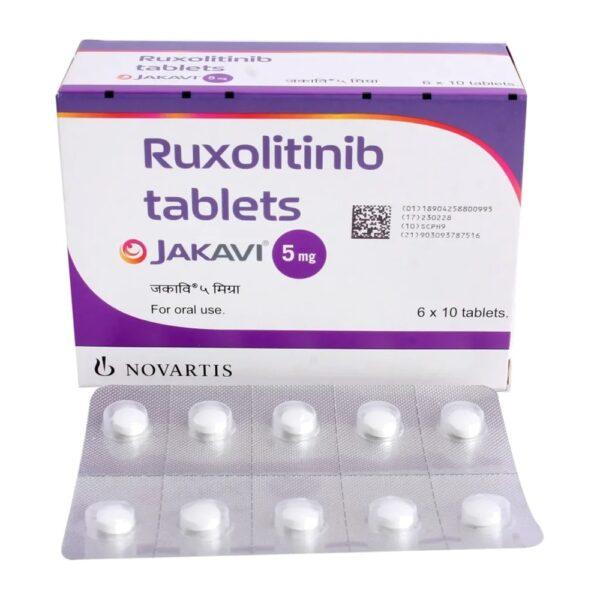
The same active ingredient, without the originator price
Generic ruxolitinib is the equivalent of branded Jakafi® — not a different medicine, and not a “knockoff.”
Any switch between brand and generic should be discussed with your prescribing doctor. Reference prices are indicative public list prices and vary by market.
Available generic ruxolitinib options
Every option contains ruxolitinib and requires a valid prescription. Grouped by strength.
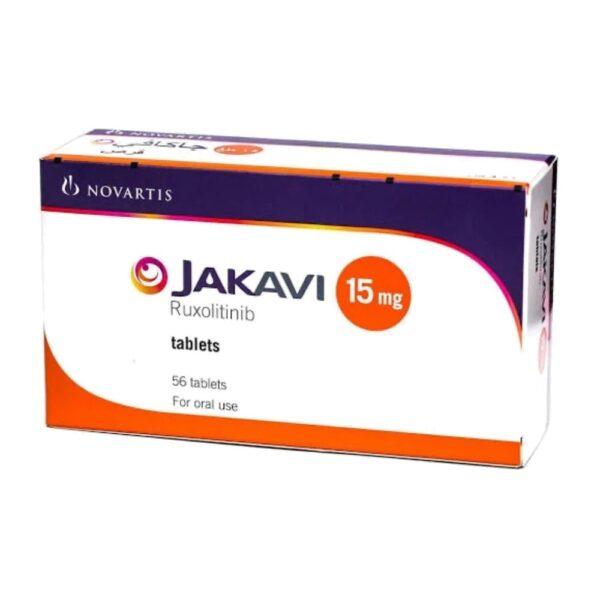
Availability varies by destination. All options are dispatched after pharmacist review of your prescription.
What Jakafi® typically costs — and the generic alternative
Typical branded reference prices by market, next to our generic ruxolitinib price.
| Market | Branded Jakafi® — reference price | Generic ruxolitinib — OnlineMeds |
|---|---|---|
| United States | ~$16,000 / month (brand) branded list price |
from
$1,540.00 / tablet
tracked worldwide shipping · Rx required
|
| United Kingdom | ~£3,500 / month (brand) branded list price |
from
$1,540.00 / tablet
tracked worldwide shipping · Rx required
|
| Australia | ~A$5,800 / month (brand) branded list price |
from
$1,540.00 / tablet
tracked worldwide shipping · Rx required
|
Reference prices are indicative public list prices for the originator brand. Prices vary by destination & quantity — not a promised discount.
Ruxolitinib, explained simply
Written and reviewed by our pharmacist team. Informational only — your doctor directs your treatment.
Ruxolitinib is the active ingredient in Jakafi® (sold as Jakavi® outside the US), the JAK1/JAK2 inhibitor from Incyte and Novartis for myelofibrosis, polycythaemia vera and graft-versus-host disease. Generic ruxolitinib contains the same active ingredient at the same strengths and is made by licensed pharmaceutical manufacturers, often at a lower ruxolitinib cost. Used as prescribed by a licensed medical professional.
Jakafi® is a brand of ruxolitinib, an oral JAK1/JAK2 inhibitor developed by Incyte and marketed by Novartis outside the United States under the name Jakavi®. It is prescribed under haematologist supervision for intermediate or high-risk myelofibrosis, for polycythaemia vera in patients who no longer respond to or tolerate hydroxycarbamide, and for steroid-refractory graft-versus-host disease. Generic ruxolitinib contains the identical active molecule at the same tablet strengths.
Ruxolitinib blocks the Janus-associated kinases JAK1 and JAK2, enzymes that relay signals inside blood-forming cells. In conditions such as myelofibrosis and polycythaemia vera this signalling pathway is overactive, driving excess cell production, spleen enlargement and inflammatory symptoms. By dampening this overactive JAK signalling, ruxolitinib acts on the biological pathway associated with these conditions. Your haematologist decides whether this mechanism is appropriate for your diagnosis and monitors your response throughout treatment.
Ruxolitinib is prescribed for adults with intermediate or high-risk myelofibrosis, with polycythaemia vera inadequately controlled by or intolerant to hydroxycarbamide, and for certain patients with acute or chronic graft-versus-host disease. It is a specialist medicine started and supervised by a haematologist, not a self-directed treatment. Suitability depends on your platelet count, blood counts and overall clinical picture, all of which your specialist assesses before and during therapy.
Ruxolitinib is available as 5 mg, 10 mg, 15 mg and 20 mg tablets taken twice daily. The starting dose is determined by the patient's platelet count and diagnosis, then adjusted by the haematologist according to response and blood counts. Doses are reduced or interrupted if platelets or haemoglobin fall too low. This information is educational only; always follow the exact dose and schedule set by your prescribing specialist.
Never change your dose on your own.
The most common side effects are anaemia and thrombocytopenia (low platelet counts), which are dose-related and monitored through regular blood tests. Ruxolitinib can also raise the risk of infections, including reactivation of viruses such as herpes zoster, and may cause bruising, dizziness or raised cholesterol. Report fever, persistent bleeding or signs of infection to your care team promptly. Your haematologist will weigh these risks against the benefits for your condition.
Report new or worsening symptoms to your doctor promptly. This is not a complete list — see the patient information leaflet.
Store as directed on the patient information leaflet, usually at room temperature away from moisture and out of reach of children. Always follow the storage guidance supplied with your medicine.
Ruxolitinib was the first JAK inhibitor approved for myelofibrosis and remains the most widely used. Newer agents in the same class include fedratinib, sold as Inrebic, and pacritinib, which may be options for patients with lower platelet counts or those who no longer respond to ruxolitinib. These medicines differ in their dosing schedules and side-effect profiles rather than being interchangeable; your haematologist selects among them based on your blood counts, spleen response and tolerability. Any switch between JAK inhibitors is a specialist decision.
Jakafi® carries a high list price because Incyte holds the originator marketing rights and set pricing to recover research, trial and promotional costs during patent protection. In the United States a month of branded therapy commonly runs into the high four or low five figures. Generic ruxolitinib costs less because competing licensed manufacturers supply the identical active ingredient without those originator overheads. For patients funding treatment themselves, choosing generic ruxolitinib can substantially reduce the monthly ruxolitinib cost, which is why many people ask to buy ruxolitinib online from lower-priced international markets. It should still be taken exactly as prescribed by a licensed medical professional.
Ruxolitinib is taken as tablets twice daily, with your starting dose based on your platelet count and adjusted over time by your haematologist. Regular blood tests are essential because the most common and dose-limiting side effects are anaemia and low platelet counts (thrombocytopenia); your specialist may lower the dose or pause treatment if these develop. There is also an increased risk of infections, so report fever or unusual symptoms promptly. Do not stop ruxolitinib abruptly without medical advice, as symptoms can return.
Jakafi® vs generic ruxolitinib
| Attribute | Jakafi® (brand) | Generic ruxolitinib |
|---|---|---|
| Active ingredient | Ruxolitinib | Ruxolitinib (same molecule) |
| Strengths | 5, 10, 15, 20 mg tablets | 5, 10, 15, 20 mg tablets Same |
| Dosage form | Oral tablet | Oral tablet Same |
| Originator | Incyte / Novartis (Jakafi® / Jakavi®) | licensed pharmaceutical manufacturer |
| Typical dosing | Twice daily, dose by platelet count | Twice daily, dose by platelet count Same |
| Prescription required | Yes | Yes Same |
| Typical cash price | ~$16,000 / month (brand) (United States reference) | from $1,540.00 / tablet |
| Availability | National pharmacies & insurance coverage | Ships worldwide from OnlineMeds — Rx required |
Equivalence refers to the active ingredient, strength, and form. Discuss any switch with your prescribing doctor.
A pharmacy, not a marketplace
Every order is sourced, checked, and dispatched by our own licensed pharmacy team.
Frequently asked questions
Quick answers about equivalence, prescriptions, legality, and delivery. Tap a question to expand.
What is the brand name for ruxolitinib?
How much does ruxolitinib cost?
Is generic ruxolitinib the same as Jakafi?
Do I need a prescription for ruxolitinib?
How is ruxolitinib taken?
Is it legal to import generic ruxolitinib?
How long does delivery take?
Sangeeta Shukla is a licensed clinical pharmacist with 19 years of experience. She holds a B.Pharm and M.Pharm from Zaporozhye State Medical University. At OnlineMeds, she reviews medicine and health content to help ensure it is accurate, evidence-based, and easy to understand.
Informational only. Used as prescribed by a licensed medical professional. This content is for informational purposes only and does not replace advice from your doctor or pharmacist. Consult a healthcare professional before use.
This page draws on public information from recognised health authorities and cancer organisations. Always follow the guidance of your own doctor.