
Generic Daklinza (Daclatasvir)
Same active ingredient — daclatasvir — as Daklinza®, at a substantially lower price. Produced by licensed pharmaceutical manufacturers.
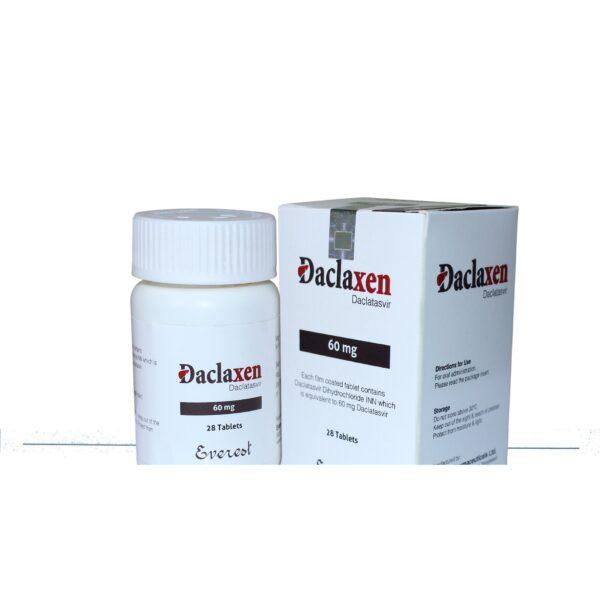
The same active ingredient, without the originator price
Generic daclatasvir is the equivalent of branded Daklinza® — not a different medicine, and not a “knockoff.”
Any switch between brand and generic should be discussed with your prescribing doctor. Reference prices are indicative public list prices and vary by market.
Available generic daclatasvir options
Every option contains daclatasvir and requires a valid prescription. Grouped by strength.
Availability varies by destination. All options are dispatched after pharmacist review of your prescription.
What Daklinza® typically costs — and the generic alternative
Typical branded reference prices by market, next to our generic daclatasvir price.
| Market | Branded Daklinza® — reference price | Generic daclatasvir — OnlineMeds |
|---|---|---|
| United States | ~$63,000 / 12-week course (brand) branded list price |
from
$70.00 / tablet
tracked worldwide shipping · Rx required
|
| United Kingdom | ~£29,000 / 12-week course (brand) branded list price |
from
$70.00 / tablet
tracked worldwide shipping · Rx required
|
| Australia | ~A$55,000 / 12-week course (brand) branded list price |
from
$70.00 / tablet
tracked worldwide shipping · Rx required
|
Reference prices are indicative public list prices for the originator brand. Prices vary by destination & quantity — not a promised discount.
Daclatasvir, explained simply
Written and reviewed by our pharmacist team. Informational only — your doctor directs your treatment.
Daklinza is Bristol Myers Squibb's brand of daclatasvir, an NS5A inhibitor taken together with sofosbuvir to treat chronic hepatitis C. Generic daclatasvir contains the identical active ingredient at the same 60 mg strength, so patients researching daclatasvir cost often choose it to reduce treatment expense. Used as prescribed by a licensed medical professional.
Daclatasvir is a direct-acting antiviral medicine used to treat chronic hepatitis C infection. It belongs to a class called NS5A inhibitors and is almost always prescribed alongside sofosbuvir as part of a combination regimen. Daklinza is the originator brand from Bristol Myers Squibb; generic daclatasvir is the same molecule, at the same 60 mg strength and tablet form, supplied by a licensed pharmaceutical manufacturer. Treatment is always supervised by a hepatologist or other specialist prescriber.
Hepatitis C is caused by a virus that copies itself inside liver cells. Daclatasvir blocks a viral protein called NS5A, which the virus relies on to replicate and assemble new particles. Taken with sofosbuvir, which targets a different step of the viral life cycle, the combination interrupts replication across the treatment course. Because two mechanisms are used together, a 12-week daclatasvir-plus-sofosbuvir regimen can clear chronic hepatitis C in many patients. All treatment should be supervised by a specialist prescriber.
Daclatasvir is intended for adults with chronic hepatitis C whose specialist has assessed their genotype, liver health and any co-existing conditions and decided a daclatasvir-plus-sofosbuvir regimen is appropriate. It is not suitable for everyone: dosing may need adjustment when taken with certain other medicines, and people with advanced cirrhosis need careful specialist evaluation. It is not used for hepatitis A or B. A hepatologist or infectious-disease clinician decides suitability, and the medicine is used only as prescribed by a licensed medical professional.
The usual dose is one 60 mg daclatasvir tablet taken once daily, together with sofosbuvir, most commonly for 12 weeks. The tablet can be taken with or without food. Your specialist may adjust the dose if you are taking certain interacting medicines, and treatment length can vary based on genotype and liver condition. Do not stop early or change the dose without advice. This information is educational only; always follow the regimen prescribed by a licensed medical professional.
Never change your dose on your own.
When taken with sofosbuvir, commonly reported effects include headache, tiredness, nausea and difficulty sleeping. Serious slowing of the heart rate has been reported when daclatasvir-based regimens are taken with the heart medicine amiodarone, so this combination is generally avoided. Seek medical advice promptly if you feel faint, unusually short of breath, or develop signs of a serious reaction. This is not a complete list; report any new or persistent symptoms to your prescriber, and take the medicine only as prescribed by a licensed medical professional.
Report new or worsening symptoms to your doctor promptly. This is not a complete list — see the patient information leaflet.
Store as directed on the patient information leaflet, usually at room temperature away from moisture and out of reach of children. Always follow the storage guidance supplied with your medicine.
Modern hepatitis C treatment uses direct-acting antivirals that target different steps of the viral life cycle. Daclatasvir is an NS5A inhibitor and is paired with the polymerase inhibitor sofosbuvir. Other regimens combine an NS5A inhibitor with additional agents in a single fixed-dose tablet, such as sofosbuvir-velpatasvir. The right combination depends on hepatitis C genotype, prior treatment and liver condition, which is why a specialist selects the regimen. Where a clinician has prescribed daclatasvir specifically, generic daclatasvir offers the same active ingredient as branded Daklinza at a lower cost.
Branded Daklinza carried a very high launch price because Bristol Myers Squibb needed to recover the research, clinical-trial and marketing costs behind a novel antiviral, and held market exclusivity that limited competition. Those factors — not the raw cost of the tablet — drove the headline daclatasvir cost. Once exclusivity lapsed, licensed manufacturers were able to produce the same 60 mg daclatasvir molecule and compete on price. Generic daclatasvir therefore costs substantially less than Daklinza while containing the identical active ingredient, at the same strength and dosage form, dispensed on the same prescription basis.
A typical daclatasvir-plus-sofosbuvir course runs for 12 weeks, with one 60 mg tablet taken once daily. Your specialist will usually check liver function and, at the end of treatment and again around 12 weeks later, measure hepatitis C viral load to confirm the virus has been cleared. Tell your prescriber about every other medicine you take, as some drugs — including certain heart, anti-seizure and herbal products like St John's Wort — can interact and require dose changes or alternatives. Completing the full course exactly as prescribed by a licensed medical professional is important.
Daklinza® vs generic daclatasvir
| Attribute | Daklinza® (brand) | Generic daclatasvir |
|---|---|---|
| Active ingredient | Daclatasvir | Daclatasvir Same |
| Strengths | 60 mg | 60 mg Same |
| Dosage form | Film-coated tablet | Film-coated tablet Same |
| Originator | Bristol Myers Squibb | licensed pharmaceutical manufacturer |
| Typical dosing | One tablet once daily (with sofosbuvir) | One tablet once daily (with sofosbuvir) Same |
| Prescription required | Yes (Rx) | Yes (Rx) Same |
| Typical cash price | ~$63,000 / 12-week course (brand) (United States reference) | from $70.00 / tablet |
| Availability | National pharmacies & insurance coverage | Ships worldwide from OnlineMeds — Rx required |
Equivalence refers to the active ingredient, strength, and form. Discuss any switch with your prescribing doctor.
A pharmacy, not a marketplace
Every order is sourced, checked, and dispatched by our own licensed pharmacy team.
Frequently asked questions
Quick answers about equivalence, prescriptions, legality, and delivery. Tap a question to expand.
What is the brand name for daclatasvir?
How much does daclatasvir / Daklinza cost?
Is generic daclatasvir the same as Daklinza?
Do I need a prescription for daclatasvir?
How is daclatasvir taken?
Is it legal to import generic daclatasvir?
How long does delivery take?
A. Prem Shree Nandan is a licensed clinical pharmacist with 10 years of experience. He holds a B.Pharm and M.Pharm from Christian Medical College. At OnlineMeds, he reviews medicine and health content to help ensure it is accurate, evidence-based, and easy to understand.
Informational only. Used as prescribed by a licensed medical professional. This content is for informational purposes only and does not replace advice from your doctor or pharmacist. Consult a healthcare professional before use.
This page draws on public information from recognised health authorities and cancer organisations. Always follow the guidance of your own doctor.