Free express shipping over $999 · Verified pharmaceuticals · Discreet packaging worldwide
Skip to order
Prescription only medicine

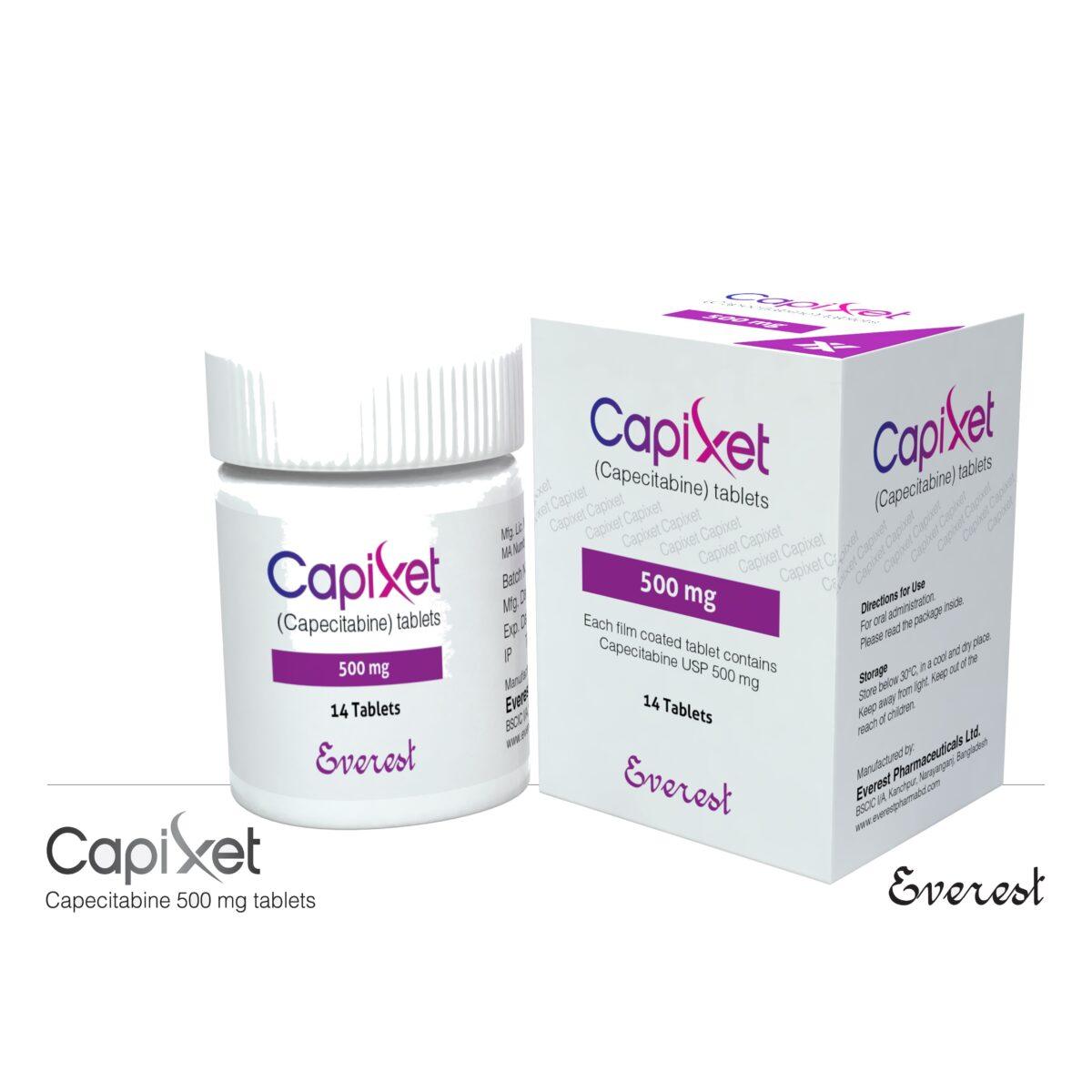
Capixet 500 mg Tablets

Capecitabine 500 mg · Generic equivalent of Xeloda

Capixet 500 mg Tablets is a trusted medication containing Capecitabine, designed for personal use under the guidance of a healthcare professional. Available for prescription-based international supply with discreet worldwide delivery.

Active ingredient
Capecitabine
Strength
500 mg
Form
Tablet
Made in
Bangladesh
Prescription
Required
Commonly used forChemotherapy Medicines
$30.00 per pack of 14 tablets

Prescription required — upload it at checkout.

Generic equivalent of Xeloda — up to 80% less than the branded price

Verified pharmacy Genuine medication Tracked shipping Medically reviewed by Harsh Bootwala
Licensed Pharmacy Trust & safety
Licensed Manufacturers Every medicine from a licensed manufacturer
Dedicated Oncology Team Doctor + pharmacist review every order before dispatch
Worldwide Delivery UK · US · AU · EU · NZ — tracked and insured
About this medicine

What is Capixet 500 mg Tablets?

Capecitabine is a chemotherapy tablet. Inside the body — and preferentially inside tumour tissue — it is converted into 5-fluorouracil (5-FU), one of the most widely used chemotherapy drugs, which means a course of 5-FU can be taken at home as tablets rather than as an infusion. It is used for bowel (colorectal) cancer after surgery and when it has spread, for breast cancer after other treatments, and for stomach and oesophageal cancer, on its own or with drugs such as oxaliplatin (CAPOX) or docetaxel.

It is taken twice a day, within 30 minutes after a meal, for 14 days followed by 7 days off; your dose is calculated from your body surface area and rounded to whole 500 mg and 150 mg tablets, so you may take a mix. Hand-foot syndrome and diarrhoea are the side effects to watch for and report early.

A small number of people have an inherited shortage of the enzyme (DPD) that clears 5-FU and can react severely; a DPYD gene test before the first dose is now required by the US label and standard in the UK and EU. Capecitabine is a prescription-only medicine; a valid prescription must be provided at checkout.

How it works

How does Capecitabine work?

Capecitabine is a 'prodrug' — inactive when swallowed. Three enzyme steps convert it to 5-fluorouracil, and the last enzyme (thymidine phosphorylase) is more plentiful in many tumours than in normal tissue, so more of the active drug is released where it is needed. 5-FU is a fake building block for DNA and RNA: it jams the enzyme thymidylate synthase and is built into RNA, and the dividing cell dies. Normal fast-dividing cells — the gut lining, the palms and soles, the bone marrow — are affected too, which is where the side effects come from. The enzyme DPD clears 5-FU from the body; people with little DPD activity keep the drug for far longer and can be seriously harmed by a standard dose.

Three-step activation

Capecitabine → 5'-DFCR (liver carboxylesterase) → 5'-DFUR (cytidine deaminase) → 5-FU (thymidine phosphorylase, enriched in tumour tissue).

Thymidylate synthase block

The 5-FU metabolite FdUMP inhibits thymidylate synthase, starving the cell of thymidine for DNA synthesis.

RNA disruption and death

FUTP is incorporated into RNA, disrupting processing; the cell arrests and undergoes apoptosis. DPD is the rate-limiting clearance enzyme.

Uses

What is Capecitabine used for?

Colorectal cancer — adjuvant (stage III) and metastatic

Alone or with oxaliplatin (CAPOX / XELOX); with bevacizumab in some settings.

FDA EMA CDSCO
Breast cancer — metastatic

With docetaxel after anthracycline failure, or alone; with lapatinib in HER2-positive disease. Also as adjuvant treatment in residual triple-negative disease (guideline-based).

FDA EMA CDSCO
Gastric, gastro-oesophageal junction and oesophageal cancer

With a platinum drug for unresectable or metastatic disease; also as part of perioperative regimens.

FDA EMA CDSCO
Pancreatic adenocarcinoma — adjuvant

With gemcitabine after surgical resection.

FDA EMA
Biliary and other gastrointestinal cancers

Guideline-supported uses under specialist supervision; not label indications.

Off-label

Only your oncologist can determine whether this medicine is right for your diagnosis. The above is for information only.

Dosage

How to take Capixet 500 mg Tablets

Your oncologist will prescribe your exact dose. The right dose for you depends on your weight, kidney and liver function, and — for some medicines — your genetic test results.

Always take exactly as prescribed. Do not change your dose or stop taking this medicine without speaking to your doctor first, even if you feel well.

Missed a dose? Skip a missed dose and take the next one at the usual time. Do not double up. Tablets left at the end of a cycle should not be taken — tell your team.

With food? Take within 30 minutes after food with water. Swallow whole; do not crush or cut (if a tablet must be split, ask your pharmacist — the dust is cytotoxic). Avoid folic-acid supplements unless prescribed.

Important safety information

Safety & warnings

Please read this section before taking Capixet 500 mg Tablets and discuss any concerns with your oncologist.

Important: DPD deficiency — test before starting

People with complete deficiency of the enzyme DPD (dihydropyrimidine dehydrogenase) cannot clear the active drug and have died from a standard dose; partial deficiency causes severe toxicity. The current label requires testing for DPYD gene variants before the first dose unless treatment cannot wait, and capecitabine is not given to anyone with complete deficiency. Ask your oncologist whether you have been tested. Unusually severe mouth ulcers, diarrhoea, low blood counts or neurological symptoms in the first cycle must be reported at once — an antidote exists if given early.

Important: Vitamin K antagonists (warfarin) — bleeding

Capecitabine can markedly increase the effect of warfarin and other coumarin anticoagulants, and serious bleeding — including deaths — has occurred, sometimes within days and sometimes a month after stopping capecitabine. If you take warfarin your INR must be monitored very closely, or an alternative anticoagulant chosen. Tell your team before starting.

Common side effects

Side effects affect some people, not everyone. Most are manageable — let your treatment team know about anything that concerns you.

  • Diarrhoea
  • Hand-foot syndrome (redness, tingling, peeling of palms and soles)
  • Nausea, vomiting, reduced appetite
  • Tiredness (fatigue)
  • Mouth soreness (stomatitis)
  • Abdominal pain, constipation
  • Low white cells, anaemia
  • Raised bilirubin
  • Watery eyes, skin darkening, nail changes
  • Hair thinning (mild)

Contact your doctor immediately if you notice:

  • Diarrhoea more than four times a day, or with blood or dehydration Stop the tablets and contact your team the same day — severe diarrhoea can become dangerous quickly.
  • Painful, blistered or peeling hands or feet that affect walking or gripping Stop and contact your team; the dose is paused until it settles, then usually reduced.
  • Fever of 38°C or higher, chills, or signs of infection Go to the emergency department — neutropenic infection is a medical emergency.
  • Chest pain, palpitations, breathlessness Seek emergency care — fluoropyrimidines can cause coronary artery spasm, even in people without heart disease.
  • Mouth ulcers that stop you eating or drinking Stop and contact your team.
  • Confusion, unsteadiness, slurred speech Seek urgent review — rare neurological toxicity, more likely with DPD deficiency.
  • Any bleeding while on warfarin Seek urgent care (boxed warning).
  • Very severe side effects in the first cycle Tell your team at once — possible DPD deficiency; an antidote exists if given early.

Important: tell your doctor about these medicines

Taking Capecitabine with certain other medicines can be dangerous. Always tell every doctor, dentist, and pharmacist about all medicines you are taking.

  • Warfarin and other coumarin anticoagulants Critical

    Marked INR rise and serious bleeding (boxed warning).

  • Brivudine and sorivudine (antivirals) Critical

    Profound DPD inhibition — fatal toxicity has occurred.

  • Other fluoropyrimidines (5-FU, S-1, tegafur) Critical

    Doubled 5-FU exposure.

  • Phenytoin Major

    Phenytoin levels rise; toxicity reported.

  • Live vaccines Major

    Risk of serious infection while immunosuppressed.

Pregnancy & breastfeeding

Capecitabine can harm an unborn baby and must not be used in pregnancy. Women who could become pregnant should use effective contraception during treatment and for at least six months after the last dose.

Do not breastfeed during treatment or for two weeks after the last dose.

Capecitabine may impair fertility in men and women. Discuss sperm banking or egg/embryo freezing before your first dose if relevant.

Storage

How to store Capixet 500 mg Tablets

Temperature

Store below 30°C (86°F).

Light & moisture

Keep in the original blister, protected from moisture.

Keep away from children

Keep out of the sight and reach of children.

Safe handling

Cytotoxic medicine: swallow whole; do not crush; wash hands after handling. Carers should avoid direct contact with tablets. Return unused tablets to a pharmacy.

Travelling

Carry in original packaging with your prescription and an oncologist's letter, and a written note of your dosing days.

Reviewed for accuracy

Medically reviewed content

Harsh Bootwala

Harsh Bootwala

B.Pharm, M.Pharm

Harsh Bootwala is a licensed clinical pharmacist with 12 years of experience. He holds a B.Pharm and M.Pharm from Bombay University. At OnlineMeds, he reviews medicine and health content to help ensure it is accurate, evidence-based, and easy to understand.

Our commitment to you

How we support oncology patients

We understand that accessing the right cancer medicine can feel overwhelming. Here is what you can expect from us.

Personal oncology support

Every enquiry is reviewed by our oncology doctor and pharmacist team — not an automated system.

Genuine, verified medicine

Sourced exclusively from licensed pharmaceutical manufacturers. Every batch is traceable from origin to your door.

Prescription checked before dispatch

We verify every prescription with our internal medical team. No shortcuts, no exceptions.

Cold-chain logistics

Temperature-sensitive medicines shipped with appropriate packaging to maintain integrity.

Discreet, plain packaging

No pharmacy branding or product name on the outer packaging.

Up to 80% less than branded

Generic oncology medicines contain the same active ingredient as the originator brand — at a fraction of the cost.

FAQ

Frequently asked questions

Is Capecitabine the same as Xeloda?

Capecitabine is the active ingredient in Xeloda. A generic Capecitabine medicine contains the same active ingredient at the same strength and is taken the same way — the main difference is cost. Always use it as prescribed by a licensed medical professional.

Is Capixet 500 mg Tablets chemotherapy?

Yes. Capecitabine becomes 5-fluorouracil inside the body, so it is chemotherapy you take at home as tablets instead of by infusion. It has the same family of side effects — gut, skin, blood counts — though hair loss is usually mild.

[2] NCI Drug Information: Capecitabine

What is the DPD test and should I have it?

DPD is the enzyme that clears 5-FU. Around 3–8% of people have partly reduced activity and a small number have almost none; for them a standard dose can be life-threatening. A blood test for DPYD gene variants before the first dose is now required by the US label (a boxed warning) and recommended in the UK and EU. Ask your oncologist whether you have been tested.

[3] EMA: Xeloda — European public assessment report

What is hand-foot syndrome and how do I manage it?

Redness, tingling, dryness and then peeling or blistering of the palms and soles, usually from the second cycle. Moisturise generously, avoid heat, friction and tight shoes, and report it early — pausing the tablets for a few days and then reducing the dose settles it in most people without losing effect.

[4] Macmillan Cancer Support: Capecitabine (Xeloda)

Why within 30 minutes after a meal?

That is how the drug was studied and approved; food changes absorption and the dose assumes it. Breakfast and evening meal are the usual anchors.

[1] FDA prescribing information: Xeloda (capecitabine) — DailyMed

I take warfarin — is that a problem?

Yes, a serious one — capecitabine carries a boxed warning for it. Warfarin's effect can rise sharply, causing dangerous bleeding, even weeks after capecitabine stops. Your team will either monitor your INR very closely or switch you to a different blood thinner before you start. Do not begin capecitabine until this has been discussed.

[1] FDA prescribing information: Xeloda (capecitabine) — DailyMed

Is Capixet 500 mg Tablets the same as Xeloda?

Capixet 500 mg Tablets contains the same active ingredient, capecitabine, at the same 500 mg strength as the originator brand Xeloda. Generic medicines must meet the same regulatory standards for quality, safety and effectiveness. Used as prescribed by a licensed medical professional.

[3] EMA: Xeloda — European public assessment report

Why did my oncologist stop it and give me an antidote?

Uridine triacetate reverses fluoropyrimidine toxicity if given within about four days of the last dose. It is used when side effects in the first cycle are unusually severe — often a sign of DPD deficiency — or after an overdose.

[1] FDA prescribing information: Xeloda (capecitabine) — DailyMed

Do I need a prescription to order Capixet 500 mg Tablets?

Yes. Capecitabine is prescription-only. Upload your oncologist's prescription at checkout; our pharmacist team reviews it before dispatch. Used as prescribed by a licensed medical professional.

Sources

References

  1. 1. FDA prescribing information: Xeloda (capecitabine) — DailyMed. https://dailymed.nlm.nih.gov/dailymed/search.cfm?labeltype=all&query=xeloda U.S. National Library of Medicine. Accessed 13 Sep 2026.
  2. 2. NCI Drug Information: Capecitabine. https://www.cancer.gov/about-cancer/treatment/drugs/capecitabine National Cancer Institute. Accessed 13 Sep 2026.
  3. 3. EMA: Xeloda — European public assessment report. https://www.ema.europa.eu/en/medicines/human/EPAR/xeloda European Medicines Agency. Accessed 13 Sep 2026.
  4. 4. Macmillan Cancer Support: Capecitabine (Xeloda). https://www.macmillan.org.uk/cancer-information-and-support/treatments-and-drugs/capecitabine Accessed 13 Sep 2026.
Medical disclaimer: This content is for informational purposes only and is not a substitute for professional medical advice, diagnosis, or treatment. Always consult a licensed healthcare professional — specifically your oncologist — before starting, changing, or stopping any medication. Information is based on NDA #020896, NCI Drug Information, and NHS patient information.
Shopping cart
Shop
0 items Cart
My account