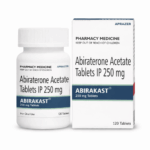
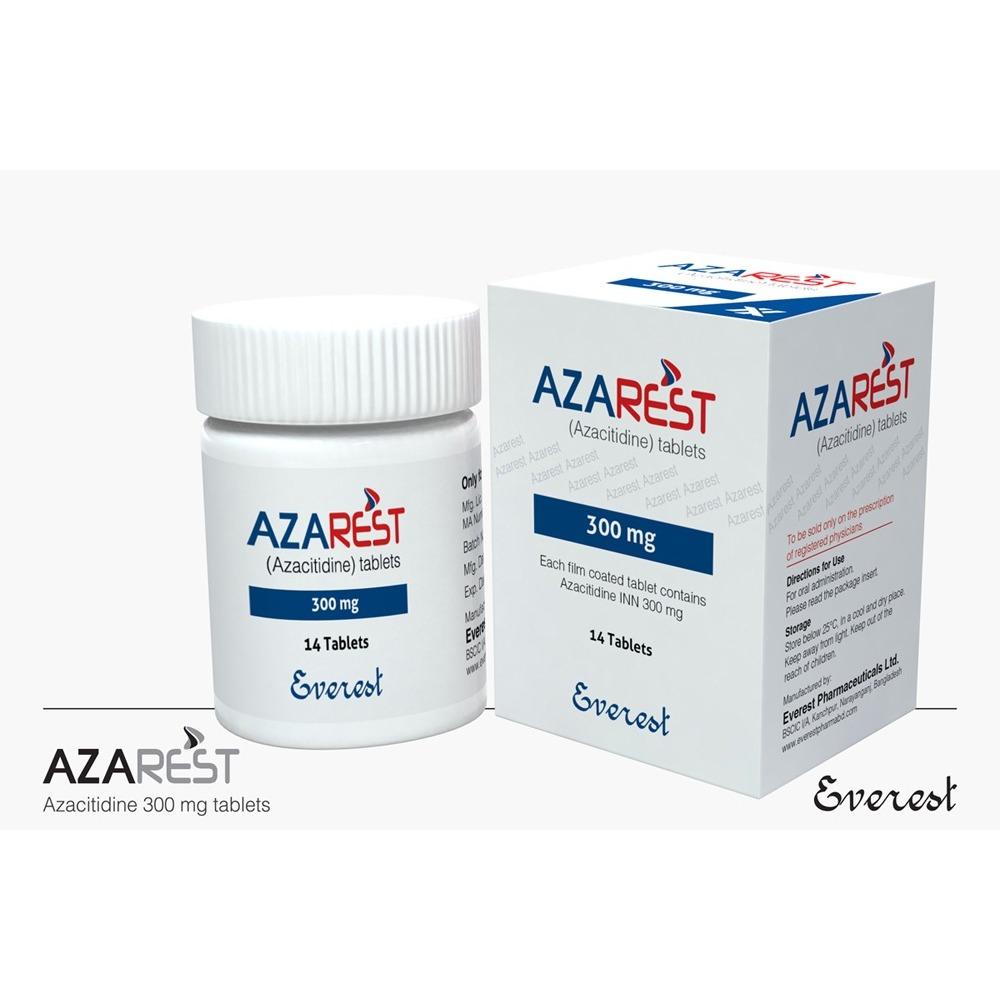
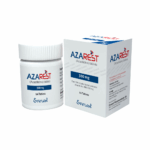
Azacitidine is a medicine for blood cancers that start in the bone marrow — myelodysplastic syndromes (MDS), acute myeloid leukaemia (AML) in people who cannot have intensive chemotherapy, and chronic myelomonocytic leukaemia. It works differently from most chemotherapy: at low doses it switches back on genes that the cancer has silenced, helping abnormal marrow cells mature normally.
It comes in two very different forms. The injection (100 mg vials) is given under the skin or into a vein by trained staff, typically for seven days of each 28-day cycle, and is used for MDS, AML and CMML — often with venetoclax in AML. The tablet (300 mg, the Onureg presentation) is taken at home for 14 days of each cycle and is used only as maintenance in AML after chemotherapy has produced a remission. The doses are not interchangeable and the tablet must not be used in place of the injection.
Low blood counts, nausea and injection-site reactions are the main side effects. Azacitidine is a prescription-only medicine; a valid prescription must be provided at checkout, and the injection must be administered by a healthcare professional.