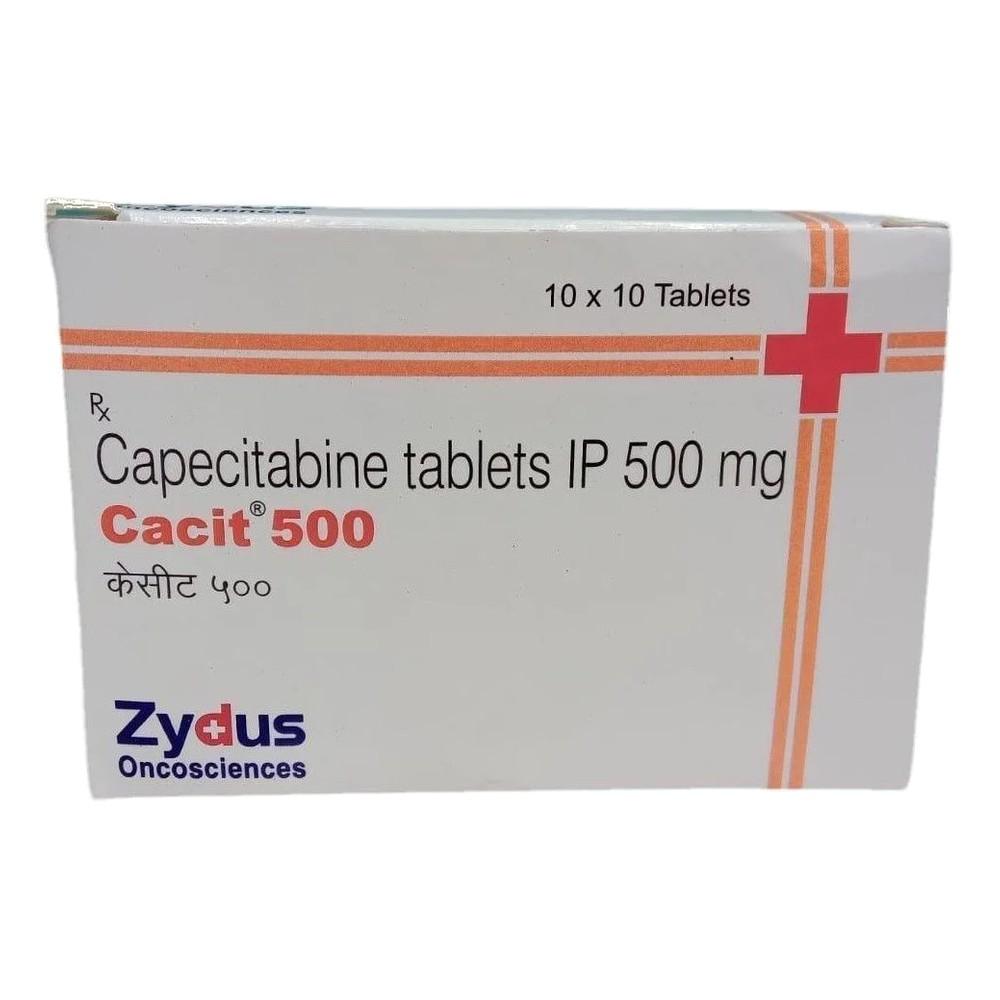
Capecitabine is a chemotherapy tablet. Inside the body — and preferentially inside tumour tissue — it is converted into 5-fluorouracil (5-FU), one of the most widely used chemotherapy drugs, which means a course of 5-FU can be taken at home as tablets rather than as an infusion. It is used for bowel (colorectal) cancer after surgery and when it has spread, for breast cancer after other treatments, and for stomach and oesophageal cancer, on its own or with drugs such as oxaliplatin (CAPOX) or docetaxel.
It is taken twice a day, within 30 minutes after a meal, for 14 days followed by 7 days off; your dose is calculated from your body surface area and rounded to whole 500 mg and 150 mg tablets, so you may take a mix. Hand-foot syndrome and diarrhoea are the side effects to watch for and report early.
A small number of people have an inherited shortage of the enzyme (DPD) that clears 5-FU and can react severely; a DPYD gene test before the first dose is now required by the US label and standard in the UK and EU. Capecitabine is a prescription-only medicine; a valid prescription must be provided at checkout.